

Westchester Bus and Public Transportation Accident Lawyer – Bee-Line, MTA, Hudson Link
Jeffrey Weiskopf at Jeffrey Weiskopf, P.C. is a premier Westchester County Bus and Public Transportation Accident Attorney who has recovered over $20 million for injured clients.
In the aftermath of a bus or train accident, when you are hurting, overwhelmed, and already fielding calls from a transit insurer, you may be asking: why hire this firm?
The answer is simple: Jeffrey is a seasoned trial attorney with nearly 20 years of experience representing injury victims in New York’s state and federal courts, including claims against public and private carriers.
The Law Office of Jeffrey Weiskopf, P.C. has built a reputation as a trusted advocate for injured riders, pedestrians, and drivers throughout Westchester County. The firm’s notable recent results include a $995,000 settlement for a pedestrian struck by a vehicle, a $225,000 pre-suit settlement for a pedestrian who suffered a fractured tibia, and a $3.25 million medical malpractice recovery.
Our Westchester County bus and public transportation accident attorneys are approachable, responsive, and offer a free consultation and case evaluation to anyone considering their legal options. We can be reached at 914-315-0111. You can also contact us securely and quickly here.
Click here to read our latest testimonials
What Does a Westchester Public Transportation Accident Lawyer Do?
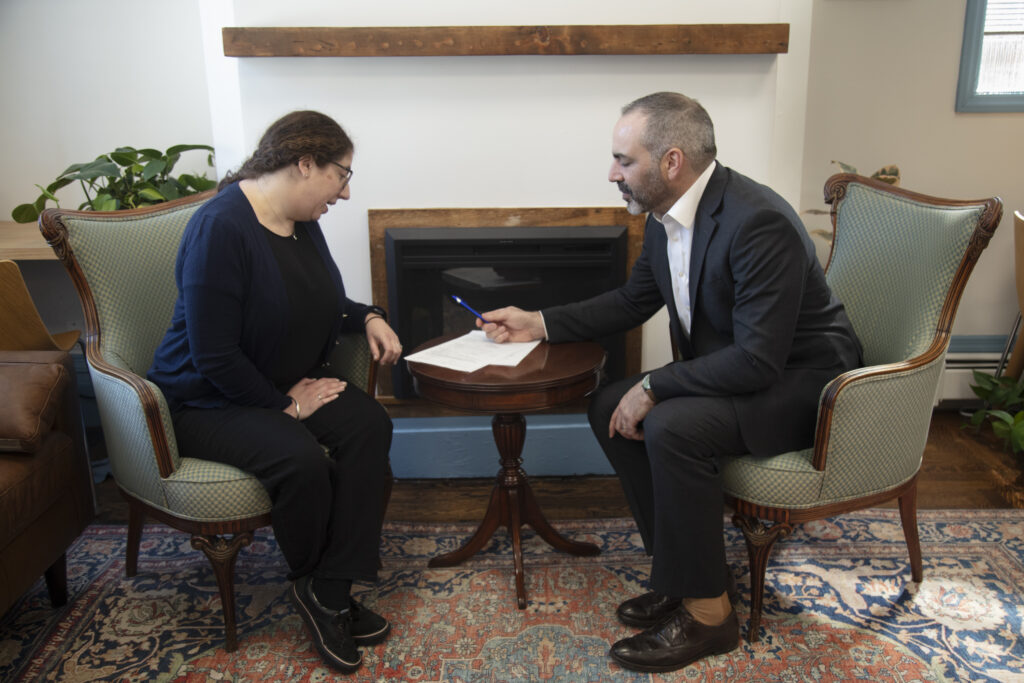
A public transportation accident lawyer identifies every party responsible for your injury, preserves the transit evidence that proves it, files the government notices that keep your claim alive, and negotiates or litigates for full compensation. Transit claims differ from ordinary car accident cases because the defendant is often a county, a state agency, or a public authority with its own procedural rules.
What evidence does a transit accident lawyer secure first?
Onboard and exterior camera footage is the first evidence a transit accident lawyer secures, because many systems record over it on a rolling schedule. A preservation letter also locks down GPS data, brake and speed telematics, operator logs, dispatch audio, and maintenance records.
What should you do right after a bus or train accident in Westchester?
You should get medical care first, then report the incident to the driver, conductor, or station staff and ask that a written report be made. Write down the route, vehicle or train car number, time, and stop, and photograph the scene and your injuries.
Collect contact information from other passengers before they scatter. Avoid giving a recorded statement to any insurer until you have spoken with a lawyer.
How long does a public transportation injury claim take?
Most public transportation injury claims take one to three years to resolve, depending on injury severity, the number of defendants, and whether the case goes to trial. Claims against government entities often move slower because of mandatory notice periods and pre-suit examinations.
How Long Do You Have to File a Claim After a Bus or Train Accident in New York?
You have as little as 90 days to file a notice of claim after a bus or train accident in New York when a county, city, or public authority owns the vehicle. The lawsuit deadline itself ranges from one year and 90 days to three years, depending on who owns and operates it.
The deadlines that most often apply to Westchester transit claims are shown below.
| Responsible party | Notice deadline | Lawsuit deadline | Governing rule |
|---|---|---|---|
| Westchester County (Bee-Line owner) | 90 days | 1 year and 90 days | General Municipal Law §§ 50-e, 50-i |
| Metropolitan Transportation Authority | 90 days | 1 year and 90 days | Public Authorities Law § 1276 |
| Metro-North Railroad (MTA subsidiary) | No formal notice of claim | 1 year and 90 days | Public Authorities Law § 1276(6) |
| MTA New York City Transit | 90 days | 1 year and 90 days | Public Authorities Law § 1212 |
| State of New York (NYSDOT) | 90 days (claim or notice of intention) | Up to 2 years | Court of Claims Act § 10 |
| Private operators and bus companies | None | 3 years | CPLR 214(5) |
| Wrongful death (private defendant) | None | 2 years from death | EPTL § 5-4.1 |
A notice of claim under General Municipal Law § 50-e is a sworn statement describing when, where, and how you were hurt, served on the correct public entity. Missing it can end a valid claim before it starts, so we treat the 90-day date as the controlling deadline in every bus case.
What happens at a 50-h hearing?
A 50-h hearing is a sworn examination in which the government entity’s lawyer questions you about the accident and your injuries before you are allowed to sue. General Municipal Law § 50-h permits the county or authority to demand it, and your testimony becomes evidence, so we prepare you in advance and attend with you.
Can you file a late notice of claim?
Yes, a New York court can allow a late notice of claim, but only if you apply before the one-year-and-90-day lawsuit deadline expires. Judges weigh whether the public entity learned the essential facts within 90 days, whether you have a reasonable excuse, and whether the delay hurt the defense.
Do You Need a Lawyer If a Bee-Line Bus or Metro-North Train Injured You?
Yes, you need a lawyer for most bus and train injury claims because government notice rules, public-entity defenses, and the no-fault system create traps an injured passenger cannot see coming. Transit operators also employ claims administrators and defense firms whose job is to close your file for as little as possible.
Those adjusters request recorded statements, dispute whether the stop was “unusual,” blame you for not holding a pole, and send you to defense doctors who minimize your injuries.
Who pays your medical bills after a bus accident in New York?
Your own household auto insurance policy pays your no-fault benefits after a bus accident in New York, even though you were riding the bus. Under Insurance Law § 5103, the bus’s insurer pays first-party benefits only when no policy covers you or a household member.
Train passengers are treated differently. A Metro-North train is not a motor vehicle, so health insurance and the claim against the railroad carry those costs instead.
What does it cost to hire a bus accident lawyer?
Hiring Jeffrey Weiskopf, P.C. costs nothing upfront, because we work on a contingency fee and you pay $0 unless we win. We advance the costs of records, experts, and filings, and our fee comes from the recovery at the end of the case.
Who Is Liable When a Bus, Train, or Transit Vehicle Injures You?
The transit operator, the government entity that owns the vehicle, another negligent driver, or a manufacturer can be liable when a transit vehicle injures you, depending on what caused the harm. Every claim must prove four elements of negligence.
- Duty: Bus drivers and railroads owe riders, pedestrians, and motorists reasonable care.
- Breach: Speeding, running a light, pulling away mid-boarding, or ignoring a known defect breaches that duty.
- Causation: The breach must cause the injury, such as a hard brake that throws a standing rider into a seat frame.
- Damages: The injury must produce measurable losses like medical bills, lost income, and pain.
These defendants appear most often in Westchester transit claims.
- The operator: Liberty Lines Transit, which runs most Bee-Line routes, and the contractor that runs Hudson Link answer for their drivers under respondeat superior and for negligent hiring or supervision.
- The vehicle owner: Westchester County owns the Bee-Line fleet, and Vehicle and Traffic Law § 388 can make an owner vicariously liable for a permissive driver’s negligence.
- The public authority: The MTA and Metro-North answer for unsafe trains, stations, platforms, and crossings.
- Other motorists: A driver who cuts off a bus or runs a red light can share or carry the fault.
- Manufacturers and maintenance contractors: Defective brakes, doors, wheelchair lifts, or kneeling systems support a products liability claim.
What duty of care does a transit operator owe its passengers?
A New York transit operator owes its passengers reasonable care under the circumstances. The Court of Appeals adopted that standard in Bethel v. New York City Transit Authority (1998), replacing the older “highest degree of care” rule for common carriers.
Can you sue over a sudden stop or jolt on a bus?
Yes, you can sue over a sudden stop or jolt on a bus, but New York requires proof that the movement was “unusual or violent” under Urquhart v. New York City Transit Authority (1995). Onboard video, telematics showing sharp deceleration, and other riders who also fell turn an adjuster’s “normal stop” into a provable claim.
How is fault divided when several parties caused the crash?
Fault is divided by percentage under New York’s pure comparative negligence rule, CPLR 1411. A rider found 10% at fault for not holding on still recovers 90% of the damages.
How Jeffrey Weiskopf, P.C. Builds Transit Injury Cases
Jeffrey Weiskopf, P.C. builds transit injury cases by moving fast on government deadlines and preparing every claim for trial. We serve notices of claim, prepare you for your 50-h hearing, and litigate in Westchester County Supreme Court in White Plains, in the Bronx and Manhattan, and in the New York Court of Claims when the State is responsible.
Jeffrey began his career as a Senior Court Attorney in the New York County courts, later became a partner at a New York personal injury firm, and has handled appeals in the Appellate Division, First and Second Departments.
We see transit crashes along Central Park Avenue, Tarrytown Road, Route 9 through Ossining and Croton, and the I-287 corridor Hudson Link uses across the Governor Mario M. Cuomo Bridge. Boarding injuries cluster at hubs like the White Plains TransCenter, Getty Square in Yonkers, and the Ossining and Tarrytown Metro-North stations.
Our office at 30 State St, Suite 2B, in Ossining is minutes from the Ossining Metro-North station, where Bee-Line Routes 13 and 19 begin. If a transit vehicle injured you, call 914-315-0111 today, before the 90-day notice window closes.

Communities We Serve Across Westchester County
We represent bus and public transportation accident victims throughout Westchester County, including these communities.
- Ossining bus accidents, Croton-on-Hudson, and Briarcliff Manor
- Tarrytown, Sleepy Hollow, and Irvington
- Peekskill, Cortlandt Manor, and Pleasantville
- White Plains, Yonkers, New Rochelle, and Mount Vernon
- Port Chester, Mount Kisco, Valhalla, Hawthorne, Elmsford, Dobbs Ferry, Scarsdale, Rye, and Mamaroneck
How Much Is a Bus or Public Transportation Accident Claim Worth?
A bus or public transportation accident claim is worth anywhere from tens of thousands of dollars to several million, and no honest lawyer can give you an average that fits your case. Value depends on the severity and permanence of your injury, your lost income, the clarity of fault, and the insurance or public funds available.
Compensation by Injury Severity
New York settlements and verdicts tend to fall into recognizable bands, though every case turns on its own facts.
- Soft-tissue injuries that heal with therapy: These often resolve in the five figures, and the main fight is New York’s serious injury threshold.
- Fractures and surgical injuries: A broken hip or tibia, a torn rotator cuff, or a spinal fusion commonly supports a recovery in the hundreds of thousands, sometimes over $1 million.
- Catastrophic injuries: Brain injury, spinal cord damage, and amputation can reach multi-million-dollar values, as our Westchester catastrophic injury lawyer page explains.
- Wrongful death: Families recover funeral costs and lost support and services, with value rising when the person who died supported dependents.
Clear video and a driver with prior violations push value up, while gaps in treatment and prior injuries pull it down.

Damages You Can Recover
You can recover the following damages after a bus or public transportation accident in New York.
- Medical expenses: Past and future treatment costs beyond what no-fault pays.
- Lost wages and earning capacity: Income lost during recovery and income lost to permanent limitations.
- Pain and suffering: Physical pain, emotional distress, and loss of enjoyment of life.
- Loss of consortium: A spouse’s claim for lost companionship and support.
- Life-care costs: Home modifications, mobility equipment, and long-term care.
- Property damage: Phones, mobility devices, and belongings destroyed in the accident.
- Wrongful death damages: Pecuniary losses recoverable by the family under EPTL § 5-4.1.
Punitive damages are generally unavailable against Westchester County and other public entities, but private operators can face them for egregious conduct.
Does New York’s serious injury threshold apply to bus passengers?
Yes, the serious injury threshold under Insurance Law § 5102(d) applies to bus passengers, so pain and suffering requires an injury such as a fracture, a significant or permanent limitation, or one that prevents normal activities for 90 of the first 180 days. The threshold does not apply to Metro-North train injuries, because a train is not a motor vehicle under the no-fault law.
How are future medical costs calculated in a transit injury case?
Future medical costs are calculated by projecting your lifetime care needs through a life-care planner, your physicians, and an economist who converts them into present-day dollars. When a judgment awards more than $250,000 in future damages, CPLR Article 50-B can require that portion to be paid over time.
How does shared fault reduce a transit settlement?
Shared fault reduces a transit settlement by your percentage of responsibility under CPLR 1411. Adjusters inflate that percentage on purpose, so we use video and witnesses to push it back toward zero.
What Causes Most Bus and Public Transit Accidents?
Collisions with other motor vehicles cause the largest share of bus transit safety events, 44% of reportable incidents in 2018 according to the Federal Transit Administration’s Bus Safety Data Report. Non-collision injuries followed at 42%, split between falls on board (26%) and boarding or alighting injuries (16%).
The most common causes of Westchester transit accidents are listed below.
- Collisions with cars and trucks: Red-light running, unsafe merges, and tailgating on corridors like Central Park Avenue.
- Sudden braking and acceleration: Hard stops that throw riders before they reach a seat.
- Boarding and alighting incidents: Closing doors, buses pulling away mid-step, and kneeling systems that fail.
- Turning and blind-spot strikes: Pedestrians and cyclists hit in crosswalks by a bus’s swing or rear wheels.
- Operator fatigue and distraction: The NTSB linked an engineer’s undiagnosed sleep apnea to the deadly 2013 Metro-North derailment at Spuyten Duyvil.
- Poor maintenance: Worn brakes, faulty doors, broken wheelchair lifts, and slick floors.
- Unsafe stops and platforms: Icy shelters, broken curbs, and gaps between platforms and train cars.
- Grade crossing collisions: The February 3, 2015 Harlem Line crash at the Commerce Street crossing in Valhalla killed six people and injured 15.
Is Westchester County liable when a contractor’s bus driver causes a crash?
Westchester County can be liable when a contractor’s bus driver causes a crash, because the County owns the Bee-Line buses that Liberty Lines Transit operates. That is why the 90-day notice to the County matters even when the driver works for a private company.
Who is responsible when a bus strikes a pedestrian or cyclist?
The bus driver and the operator are usually responsible when a bus strikes a pedestrian or cyclist, because Vehicle and Traffic Law § 1146 requires every driver to exercise due care to avoid them. Our pedestrian accident lawyer and bicycle accident attorney pages cover those claims in depth.

What Injuries Do Bus and Train Accident Victims Suffer?
Bus and train accident victims most often suffer head, spine, and orthopedic injuries, because riders are unbelted and standing passengers fall with their full body weight. The injuries we see most in Westchester transit cases are listed below.
- Traumatic brain injury and concussion: Heads strike poles, windows, and floors, as our Ossining brain injury lawyer page explains.
- Herniated discs and spinal fractures: Sudden deceleration compresses the spine, sometimes requiring fusion surgery, covered on our Ossining back injury lawyer page.
- Hip, wrist, and ankle fractures: Falls on board are especially dangerous for older riders, and any fracture meets the § 5102(d) threshold.
- Shoulder and knee tears: Rotator cuff and meniscus tears happen when riders brace against a fall.
- Crush and degloving injuries: Doors and turning wheels trap hands, arms, and feet.
- Amputations: Pedestrians and cyclists pulled under a bus or train can lose a limb.
- Post-traumatic stress: Many riders develop anxiety about returning to the bus or train they rely on.
- Fatal injuries: Families who lose a loved one can turn to our wrongful death attorney practice.
Why are bus passengers injured so often in minor crashes?
Bus passengers are injured often in minor crashes because buses have no seat belts and many riders stand. A collision that barely dents the bus can still fracture a rider’s wrist or hip.
What if your injury symptoms appear days after the accident?
Delayed symptoms are common after transit accidents, especially concussions and disc injuries that adrenaline masks. See a doctor as soon as symptoms appear and say you were in a bus or train accident, because that record links the injury to the crash.
Types of Public Transportation Accidents We Handle in Westchester
We handle every type of public transportation accident in Westchester, and each system has a different owner, operator, and set of deadlines.
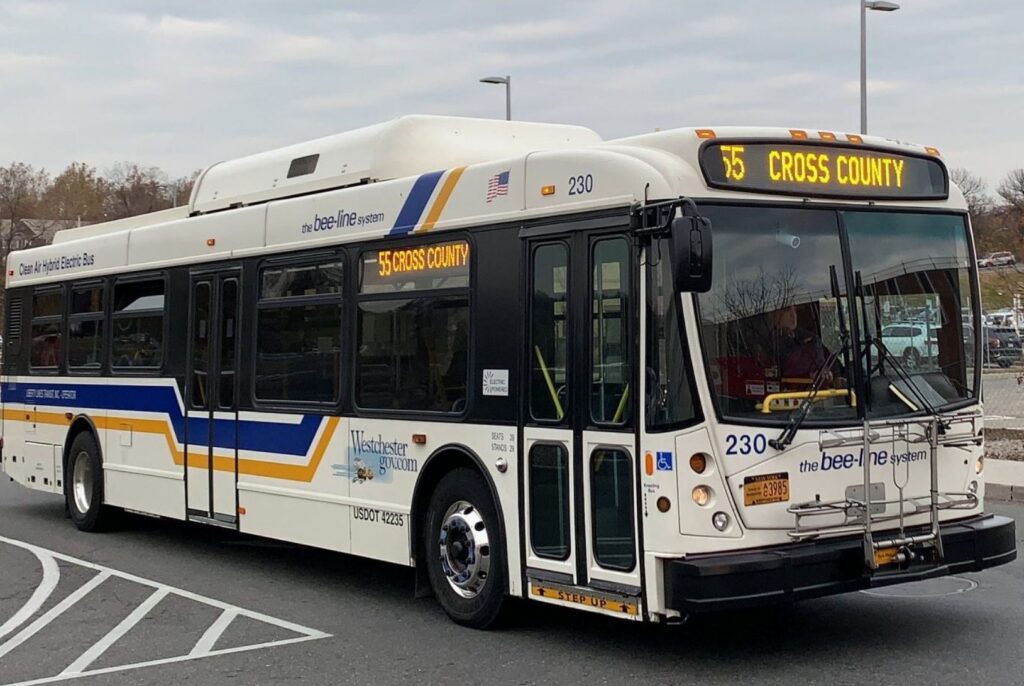
- Bee-Line bus accidents: The County-owned Bee-Line System carries roughly 30 million riders a year on about 60 routes, operated by Liberty Lines Transit under a long-term contract renewed in 2025.
- Bee-Line express and ParaTransit accidents: The BxM4C express runs from White Plains into Manhattan, and Bee-Line ParaTransit lift and securement failures cause serious falls.
- Hudson Link accidents: NYSDOT-funded coaches cross the Governor Mario M. Cuomo Bridge between Rockland County, Tarrytown, and White Plains, run by Coach USA since June 2026.
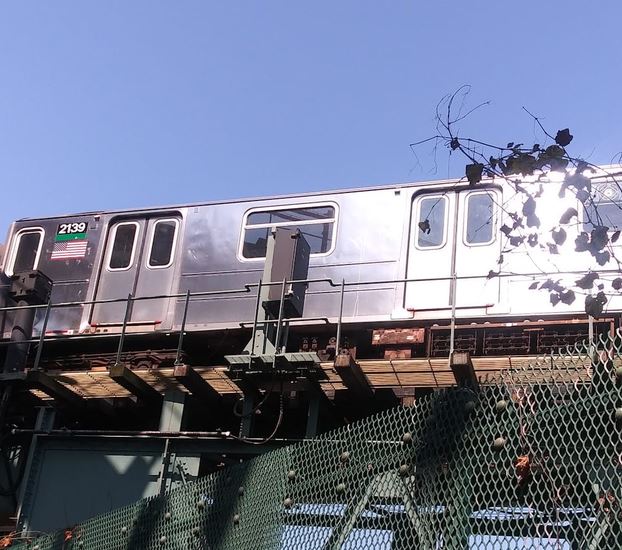
- Metro-North train and station accidents: Hudson, Harlem, and New Haven line riders are hurt by sudden train movements, platform gaps, and icy stairs.
- Haverstraw-Ossining Ferry accidents: NY Waterway runs this Metro-North connecting ferry, where ramps and wet decks cause falls.
- MTA subway and city bus accidents: Westchester commuters hurt in the Bronx or Manhattan face MTA New York City Transit’s notice rules.
- School bus accidents: District and contractor buses injure students, motorists, and pedestrians.
- Charter, coach, and shuttle accidents: Tour buses and airport, college, and hospital shuttles follow federal and state safety rules.
Can you bring a claim for a fall on a Metro-North platform or train?
Yes, you can bring a claim for a fall on a Metro-North platform or train when the railroad failed to fix or warn of a dangerous condition it knew or should have known about. Metro-North is exempt from the formal notice of claim under Public Authorities Law § 1276, but you must still sue within one year and 90 days.
What if a school bus or private charter caused the crash?
When a school bus or private charter causes a crash, you can claim against the bus company, the driver, and sometimes the school district. Public school districts require a 90-day notice of claim, while private charter companies follow the standard three-year rule.
Why Choose Jeffrey Weiskopf, P.C. for a Transit Accident Claim?
Jeffrey Weiskopf, P.C. is the right choice for a transit accident claim because you get a trial-tested attorney who knows the government deadlines, works on contingency, and handles your case personally. Jeffrey holds an AV Preeminent rating from Martindale-Hubbell, and the firm has a 5.0-star Google rating from its clients.
One client wrote that “the level of communication was top-notch… I was always kept informed of the status of my case.” That is the standard we bring to every bus and train case, and it costs you nothing unless we win.
Does the firm take MTA claims from the Bronx and Manhattan?
Yes, the firm takes MTA claims from the Bronx and Manhattan, and Jeffrey’s career began in the New York County courts. Westchester residents hurt on a Bee-Line route into the Bronx, a Metro-North train, or a city bus can work with us from our Ossining office.
Will Jeffrey personally handle your case?
Yes, Jeffrey personally handles your case and meets with you one-on-one at the first consultation. You keep his direct attention from the notice of claim through settlement or verdict.
Contact a Westchester Bus and Public Transportation Accident Lawyer Today
If you were injured on a Bee-Line bus, Metro-North train, Hudson Link coach, or any other transit vehicle, contact a Westchester bus and public transportation accident lawyer today. The 90-day notice deadline starts running on the day of the accident, and onboard video can disappear even sooner.
Call Jeffrey Weiskopf, P.C. at 914-315-0111 for a free consultation, or contact us securely online. Our phones are answered 24/7, and you pay $0 unless we win.
Call us today or submit a contact inquiry below.