

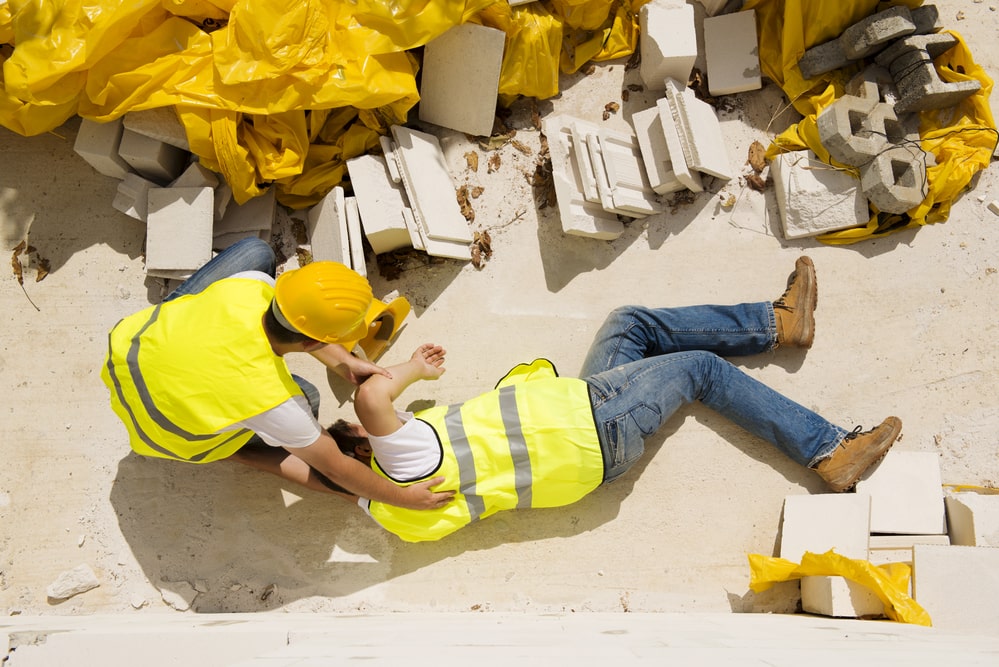
Construction site accidents are injuries and deaths caused by the hazards of building, demolition, excavation, and repair work. Falls, struck-by incidents, electrocution, and caught-in or caught-between accidents cause most of them.
The cause matters for more than safety planning. In New York, the specific hazard that injured you determines which statute applies, who is liable, and what a construction accident claim can recover.
What Are The Most Common Causes Of Construction Site Accidents?
The most common causes of construction site accidents are falls from heights, being struck by falling objects, electrocution, and being caught in or between equipment and materials. OSHA groups these four hazards together as the Focus Four because they account for roughly 60% of construction worker deaths each year.
The seven hazards responsible for most construction site injuries are described below.
Falls From Heights
Falls from heights are the leading cause of death in construction and account for roughly one in three construction fatalities. Workers fall from scaffolding, ladders, roofs, unfinished floors, and unguarded openings when guardrails, safety nets, or fall arrest systems are missing, defective, or never furnished.
Struck-By Falling Objects And Materials
Falling objects strike workers below when tools, bricks, beams, or suspended loads are not secured, netted, or barricaded. Head, neck, and spinal injuries occur even when a worker is wearing a hard hat, because a small object gains substantial force falling a few stories.
Electrocution And Contact With Power Lines
Electrocution injuries happen through contact with live wires, energized circuits, damaged tools, and overhead power lines. These accidents commonly follow a failure to de-energize a circuit, apply lockout/tagout procedures, or maintain required clearance from overhead lines.
Caught-In And Caught-Between Accidents
Caught-in and caught-between accidents crush a worker between machinery, vehicles, or materials and a fixed object. Forklift and crane rollovers, unguarded moving parts, and equipment backing without a spotter cause most of these injuries.
Trench And Excavation Collapses
Trench collapses bury workers when unshored walls give way, and a single cubic yard of soil can weigh as much as a small car. OSHA requires a protective system in any trench five feet deep or greater, yet cave-ins remain among the most fatal hazards in construction.
Slips And Trips On The Same Level
Slips and trips on level ground are a leading cause of non-fatal injuries on job sites. Debris, trailing cords, standing water, ice, and uneven ground cause the sprains, fractures, and torn ligaments behind many slip and fall injury claims.
Chemical And Hazardous Material Exposure
Chemical exposure injures workers who handle solvents, adhesives, silica dust, lead, or asbestos without respiratory protection or ventilation. Some effects appear immediately as burns or respiratory distress, while others, including silicosis and mesothelioma, may not surface for years or decades.
Why The Cause Determines Who Is Liable
The hazard that caused your injury determines which New York statute applies and which parties can be held responsible for it. A fall from a scaffold and a slip on a wet floor are governed by different rules, even when both happen on the same site.
Identifying the exact mechanism of injury is therefore the first step in any construction accident case.
Who Is Liable For A Construction Site Accident In New York?
Property owners, general contractors, subcontractors, equipment manufacturers, and site engineers can each be liable for a construction site accident. Liability depends on who controlled the work, who created or knew about the hazard, and whether the required safety equipment was actually provided.
What Protection Does New York Labor Law Give Construction Workers?
New York Labor Law gives construction workers protections that exist in no other state. Section 240(1), known as the Scaffold Law, holds owners and general contractors strictly liable when a worker is injured by a gravity-related hazard and proper elevation protection was not provided.
Section 241(6) makes those same parties responsible for violations of specific Industrial Code safety rules, and Section 200 codifies the general duty to maintain a safe worksite. Falls from heights and falling-object injuries are the two categories most often covered by Section 240(1).
Can You File A Claim If You Already Receive Workers’ Compensation?
Yes, a construction worker receiving workers’ compensation can still bring a separate lawsuit against a party other than their employer. Workers’ compensation is the exclusive remedy against an employer, but it does not bar a third-party claim against a property owner, general contractor, or equipment manufacturer.
How Long Do You Have To File A Construction Accident Claim In New York?
You have three years from the date of the accident to file a personal injury lawsuit in New York, and two years to bring a wrongful death claim. Claims against a municipal property owner require a notice of claim within 90 days, a far shorter window than most injured workers expect.
Speak With A Westchester Construction Accident Attorney
Documenting the cause of your accident early protects your claim, because scaffolding is dismantled, equipment is repaired, and site conditions change within days. Jeffrey Weiskopf, P.C. investigates job site accidents throughout Ossining and Westchester County, and you pay no fee unless we win.
Call 914-315-0111 or contact our office to discuss what happened on your job site.