

Westchester County, NY Surgical Error and Negligence Lawyer
A surgical error is a preventable mistake made before, during, or after an operation that falls below the accepted standard of medical care and causes physical injury, prolonged hospitalization, permanent disability, or death. Victims of surgical malpractice in New York can pursue compensation for additional medical treatment, lost income, pain and suffering, diminished quality of life, and the cost of corrective procedures.
At Jeffrey Weiskopf, P.C., we have spent years helping individuals and families in the Westchester county and surrounding areas impacted by surgical errors find justice and compensation. Surgical errors are among the most preventable forms of medical malpractice, yet they can have devastating effects on patients and their loved ones.
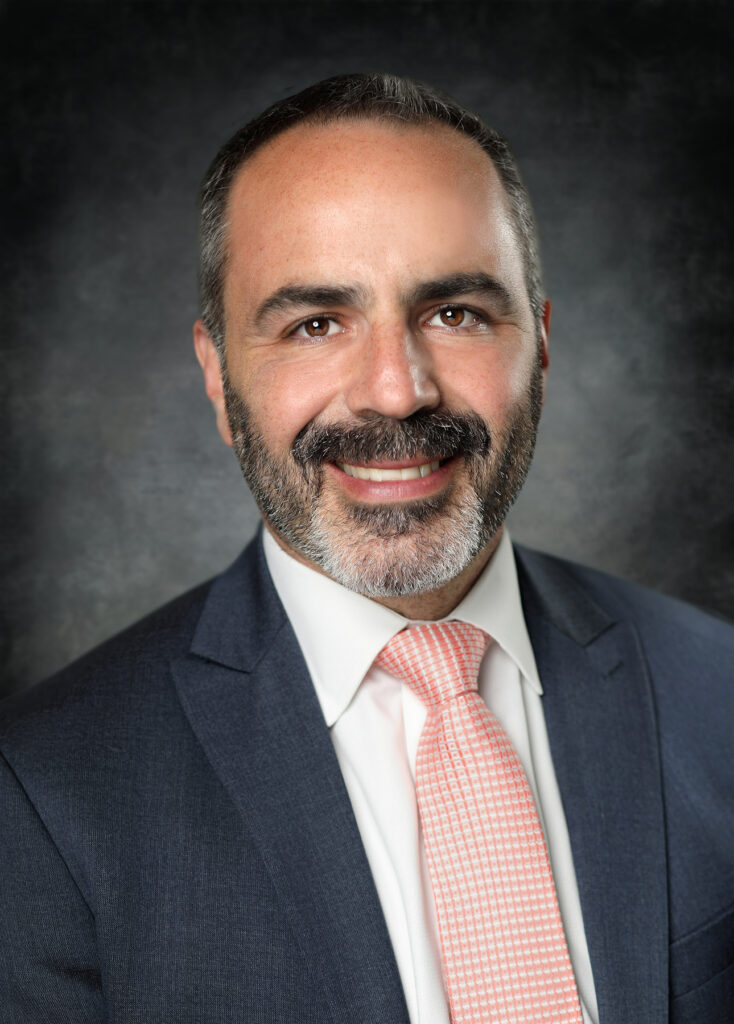
Jeffrey is a seasoned trial attorney with nearly 20 years of experience representing injury victims in New York’s state and federal courts. He is admitted to practice in the Southern, Eastern, and Northern Districts of New York.
Jeffrey’s record includes multimillion-dollar recoveries in medical malpractice cases involving failed surgeries, including a $3,250,000 recovery for a botched urologic procedure and a $775,000 settlement after a failed knee surgery.
Whether you or a family member has suffered due to a mistake in surgery, improper preoperative planning, anesthesia issues, or an error made during recovery, we understand the toll that these incidents take, and we are committed to holding negligent parties accountable.
Our Westchester county surgical error and malpractice trial lawyers offer a free consultation to discuss your potential case, help you understand your options, and provide the support you need during this challenging time.
We offer free consultations and answer the phone 24/7. Call us at 914-315-0111 or reach us through our secure contact form.
What does a surgical error attorney do?
A surgical error attorney like Jeffrey Weiskoph investigates what went wrong in the operating room, identifies every provider and entity whose conduct contributed to the harm, and builds a case capable of compelling either a settlement or a jury verdict. The work begins long before any lawsuit is filed.
We obtain and review complete operative reports, anesthesia records, post-op nursing notes, pathology results, imaging, and incident reports. We retain board-certified surgeons in the same specialty as the defendant to serve as standard-of-care experts. We coordinate with life-care planners and economists to quantify long-term losses. We then prepare the case for trial from day one, because hospitals and their insurers settle fairly only when they believe a jury verdict is the realistic alternative.
How long do I have to file a surgical malpractice in New York?
You generally have two years and six months from the date of the surgical malpractice to file a medical malpractice lawsuit in New York, under CPLR § 214-a. Different rules apply if a foreign object was left inside the body, if the patient was a minor at the time of the operation, or if the claim falls under Lavern’s Law for delayed cancer diagnosis. Do not assume you have time. Evidence and witnesses fade quickly.
What evidence should I preserve after a suspected surgical negligence or error?
Keep every discharge summary, prescription, follow-up appointment note, billing statement, and out-of-pocket receipt. Photograph any visible injury, surgical scar, or infection at regular intervals during healing. Write down a dated narrative of your symptoms and the names of every provider you have spoken with. Do not discard anything, even items that seem trivial.
Should I talk to the hospital before calling a lawyer?
You should not give a recorded statement, sign a release, or accept an in-house “patient relations” offer before consulting an independent attorney. Hospital risk management exists to protect the institution, not you. We can speak with the hospital on your behalf and protect your rights from the first conversation forward.
Do I really need an attorney to pursue a surgical malpractice claim?
Yes. Surgical malpractice cases are among the most aggressively defended cases in personal injury law, and trying to handle one without counsel almost always ends badly for the patient. Hospitals are protected by large institutional defense firms that move within hours of a sentinel event to lock down records, interview staff, and shape the narrative.
You are not facing one insurer but several: the hospital’s self-insured retention layer, the surgeon’s separate malpractice carrier, often a separate anesthesia group carrier, and sometimes a device manufacturer’s liability insurer. Each has its own incentives to minimize what they pay. Coordinating a claim against multiple insurers and proving that a board-certified surgeon deviated from the standard of care requires expert witnesses, hospital privileging records, and a working knowledge of the New York Office of Professional Medical Conduct and the New York Patient Occurrence Reporting and Tracking System (NYPORTS).
What does it cost to hire a surgical malpractice lawyer?
Nothing upfront. We handle every surgical error case on a contingency fee basis, which means you pay $0 in legal fees unless we recover compensation for you. The firm also advances the cost of expert witnesses, medical records, and litigation expenses.
What if I signed a consent form before the surgery?
Signing an informed-consent form does not waive your right to sue for malpractice. Consent forms acknowledge known risks of a procedure performed competently. They do not authorize the surgeon to deviate from the standard of care, operate on the wrong site, or leave equipment inside you. New York’s lack-of-informed-consent claim is separately recognized under Public Health Law § 2805-d.
What if I am partially to blame for the outcome?
New York follows a pure comparative negligence rule, which means even if you are found partly at fault, your recovery is reduced by your percentage of fault rather than barred. Defendants frequently argue that patients failed to follow post-op instructions or disclose a relevant medical condition. We push back on those arguments with documented timelines and treating-physician testimony.
How is negligence proven in a surgical error case?
A surgical malpractice plaintiff must prove four elements: a duty of care owed by the provider, a breach of that duty by departing from the accepted standard of practice, causation linking the breach to the resulting injury, and quantifiable damages. The most contested element is almost always breach, and proving it requires expert testimony from a surgeon practicing in the same specialty as the defendant.
We work with experts in general surgery, orthopedic surgery, neurosurgery, cardiothoracic surgery, urology, OB-GYN, and anesthesiology. New York requires a Certificate of Merit under CPLR § 3012-a at the time of filing, which means an attorney must consult with a qualified expert before the case is even commenced.
Who can be sued after a surgical error?
Liability often extends well beyond the operating surgeon. Potentially responsible parties include the attending surgeon, assisting residents and fellows, the anesthesiologist or CRNA, the scrub and circulating nurses, the hospital under theories of vicarious liability and negligent credentialing, the ambulatory surgery center, and in some cases the manufacturer of a defective surgical device or implant.
When does res ipsa loquitur apply to a surgical case?
Res ipsa loquitur, meaning “the thing speaks for itself,” allows a jury to infer negligence in cases where the injury could not have occurred absent malpractice. The classic example is a sponge, needle, or instrument left inside the patient after closure. In those cases, expert testimony on standard of care is still useful but not strictly required to reach the jury.
What if more then one provider contributed to the harm?
New York uses joint and several liability for economic damages and proportional liability for non-economic damages above a 50 percent threshold, under CPLR Article 16. We pursue every potentially liable party so that no defendant can hide behind another.
How our firm handles surgical malpractice claims
We approach every case as a trial-bound case, even when our ultimate goal is settlement. From the first intake we map out the operative team, the chain of command, and the institutional policies that should have prevented the error. We obtain the patient’s complete chart from the hospital, the surgeon’s office, the anesthesia group, and every downstream provider.
Jeffrey personally meets with every client and remains the point of contact throughout the case. We litigate in Westchester County Supreme Court in White Plains, in the Southern District of New York in White Plains and Manhattan, and across the Hudson Valley. We have handled cases originating at major Westchester hospitals including Westchester Medical Center in Valhalla, White Plains Hospital, Northern Westchester Hospital in Mount Kisco, Phelps Hospital in Sleepy Hollow, and NewYork-Presbyterian Hudson Valley Hospital in Cortlandt Manor.
Areas we serve in Westchester County and beyond
Our office is in Ossining, on State Street near the Hudson River, and we represent surgical malpractice victims throughout the region:
- Ossining, Briarcliff Manor, Croton-on-Hudson
- White Plains, Scarsdale, Harrison, Rye
- Yonkers, New Rochelle, Mount Vernon
- Tarrytown, Sleepy Hollow, Pleasantville, Mount Pleasant
- Mount Kisco, Bedford, Chappaqua, Pound Ridge
- Peekskill, Cortlandt Manor, Yorktown Heights
- Bronx, Manhattan, Brooklyn, Queens
- Putnam, Rockland, and Dutchess Counties
We also accept referrals from out-of-state counsel for cases that require New York-licensed representation.
How much is a Westchester surgical malpractice case worth?
There is no honest “average” value for a surgical malpractice or error case, because outcomes depend almost entirely on the severity of the injury, the strength of the standard-of-care evidence, and the defendant’s willingness to settle. That said, ranges in our experience and in reported New York verdicts generally fall into a few predictable bands.
Typical compensation ranges
Cases involving correctable injuries that require a single revision surgery and a finite period of disability often resolve in the low six figures, generally between $100,000 and $500,000. Cases producing permanent functional loss, such as nerve damage requiring chronic pain management or partial paralysis, frequently land in the high six to low seven figures, between $500,000 and $2 million.
Catastrophic outcomes, including anoxic brain injury from anesthesia error, loss of a limb, or paralysis, commonly reach $2 million and up, with some New York verdicts exceeding $10 million. Wrongful death claims arising from surgical negligence are governed by EPTL § 5-4.1 and are valued based on the decedent’s pecuniary contributions to surviving family members.
Damages you may recover
- Past and future medical expenses, including revision surgery, rehabilitation, and assistive devices
- Lost wages and diminished future earning capacity
- Pain and suffering, both physical and emotional
- Loss of enjoyment of life
- Disfigurement and scarring
- Loss of consortium for a spouse
- Home modification and long-term attendant care costs
- Funeral and burial expenses in wrongful death cases
- Punitive damages in rare cases involving reckless or intentional misconduct
How does comparative fault affect what I can recover?
Under New York’s pure comparative negligence rule, your recovery is reduced by your share of fault but never eliminated. If a jury finds you 10 percent at fault and awards $1,000,000, you collect $900,000.
How long until a surgical malpractice settlement comes through?
Most surgical malpractice cases resolve within eighteen to thirty-six months. Cases that go to trial can take longer. The defense rarely makes a fair offer until expert discovery is complete and a trial date is set on the calendar.
How are future medical costs calculated?
A life-care planner, usually a certified rehabilitation nurse, projects the lifetime cost of every future procedure, medication, therapy session, and assistive device the patient will need. An economist then reduces those figures to present value, factoring in medical inflation and life expectancy.
What are the most common causes of surgical errors?
Most surgical errors are not accidents in the ordinary sense. They are the foreseeable result of system failures, communication breakdowns, fatigue, undertrained staff, and shortcuts taken under production pressure. The most common causes we see include:
- Failure to follow the Joint Commission Universal Protocol for site marking and time-out verification
- Inadequate preoperative planning or imaging review
- Miscommunication during shift change or hand-off
- Anesthesia under-dosing, over-dosing, or airway mismanagement
- Failure to recognize and respond to intraoperative bleeding
- Retained surgical sponges, needles, or instruments
- Use of unqualified residents without adequate supervision
- Improper sterilization causing surgical site infection
- Inadequate post-operative monitoring on the surgical floor
- Premature discharge before complications can be identified
Are surgical residents held to the same standard as attending surgeons?
Residents are held to the standard of a reasonably competent resident at their training level, but the supervising attending is held to the full attending standard. If a resident performed the critical portion of an operation without competent supervision, the attending and the hospital share liability.
Can a hospital be sued for credentialing a dangerous surgeon?
Yes. Hospitals have a legal duty to investigate the qualifications, prior malpractice history, and disciplinary record of every surgeon they grant operating privileges to. A negligent credentialing claim can succeed even where the surgeon is judgment-proof or has independently settled.
What injuries result from surgical malpractice?
The injuries we see in surgical error cases range from disfiguring to fatal. Common categories include:
- Permanent nerve damage causing chronic pain or loss of function
- Anoxic brain injury from anesthesia or intubation error
- Bowel, bladder, or ureteral perforation requiring multiple revisions
- Postoperative hemorrhage and hypovolemic shock
- Sepsis and surgical site infection
- Vascular injury leading to amputation
- Hemiparesis or paralysis from spinal surgery error
- Loss of organ function, including kidney or reproductive organs
- Stroke during or after cardiac or neurosurgical procedures
- Disfigurement, scarring, and keloid formation
- Death
These injuries virtually always meet New York’s serious-injury threshold by any reasonable measure. They also tend to produce significant non-economic damages, because the violation of bodily integrity in an operating room carries unique psychological weight that juries recognize.
When does a post-surgical complication become malpractice?
A complication is not malpractice when it falls within the recognized range of risks for a competently performed procedure. It becomes malpractice when it results from a departure from accepted practice, such as cutting the wrong structure, ignoring a warning sign, or failing to address a bleed in time.
Can I recover for emotional trauma after a botched surgery?
Yes. Emotional and psychological injuries, including post-traumatic stress, depression, and surgical anxiety disorders, are compensable as part of pain and suffering, particularly when supported by treating-psychiatrist records.
What documentation will strengthen my case?
A daily symptom journal, photographs of healing or non-healing wounds, copies of every prescription and pharmacy receipt, mileage logs to follow-up appointments, and statements from family members who witnessed your decline all add evidentiary weight to a malpractice claim.
Types of surgical errors we handle
We handle the full range of surgical malpractice cases in Westchester County and across New York, including:
- Wrong-site, wrong-procedure, and wrong-patient surgeries, classified as never events by the National Quality Forum
- Retained foreign objects, including sponges, needles, clamps, and guide wires
- Anesthesia errors, including dosing mistakes, intubation failures, and monitoring lapses
- Robotic surgery injuries involving the da Vinci platform and similar systems
- Laparoscopic bowel, bladder, and vascular injuries
- Orthopedic surgery errors, including wrong-level spinal fusion and hardware misplacement
- Cardiothoracic surgical complications, including bypass and valve replacement errors
- OB-GYN surgical errors, including hysterectomy and Cesarean complications
- Bariatric surgery errors causing leaks, strictures, and nutritional collapse
- Plastic and reconstructive surgery errors causing nerve damage or disfigurement
- Failures of post-operative care leading to preventable death
Are robotic surgery injuries treated differently?
Robotic surgery injuries can involve both medical malpractice and product liability theories. We investigate whether the injury was caused by surgeon error, inadequate training and credentialing on the device, or a defect in the robot itself.
What if my surgery was at an ambulatory surgery center rather than a hospital?
Ambulatory surgery centers are licensed under Article 28 of the New York Public Health Law and held to the same fundamental standards as hospital operating rooms. Many also have separate corporate ownership, which can expand the universe of potentially liable defendants.
Why Retain Jeffrey Weiskopf, P.C.
At Jeffrey Weiskopf, P.C., we believe that every person who suffers from a surgical error deserves a strong advocate by their side. Surgical malpractice cases are complex and require a dedicated approach to navigate the legal and medical issues involved. Attorney Jeffrey Weiskopf has years of experience representing clients in surgical negligence cases, and we bring a determined commitment to achieving justice and compensation for those we represent.
Our approach begins with a client-centered focus, ensuring that you feel informed, supported, and empowered throughout the legal process. From the first consultation to the final resolution, we work closely with you to address your concerns, answer your questions, and provide you with clear, straightforward information about your options. Jeffrey Weiskopf’s skill as a trial lawyer and litigator has allowed him to recover substantial compensation for his clients through court trials, negotiations, mediation, and alternative dispute resolution. Whether through a negotiated settlement or a jury verdict, our goal is always to achieve the best possible outcome for you.
Our firm’s dedication goes beyond simply handling your case; we take the time to truly understand your situation and the impact the negligence has had on your life. This commitment allows us to craft a legal strategy that is tailored to your unique needs and circumstances. We also offer a free consultation and case evaluation, giving you the opportunity to discuss your case without financial pressure and explore how we may be able to assist you in your journey toward justice.
When you choose Jeffrey Weiskopf, P.C., you can rest assured that you have a compassionate and dedicated team by your side, advocating for your rights and tirelessly working to hold negligent parties accountable. Let us put our experience to work for you and help you pursue the justice and compensation you deserve.
Call Our Westchester Surgical Errors Lawyer For Your Free Consultation
If you or a loved one has suffered due to a surgical error, call our firm as soon as possible. Medical and surgical malpractice can have devastating and long-lasting effects, impacting every aspect of your life and creating significant financial, emotional, and physical challenges. At Jeffrey Weiskopf, P.C., our Westchester, NY medical malpractice and surgical error lawyers are here to help you pursue justice and secure the compensation you need to move forward.
Be sure to seek the legal support and guidance you deserve. Contact us today at 914-350-5175 to schedule your free consultation and discuss your case with our compassionate and experienced team. You can also visit our office at 30 State St, Suite 2B, Ossining, NY 10562.

Call us today or submit a contact inquiry below.