

Drowning Accident Attorney Westchester County, New York
A drowning or near-drowning accident occurs when a person experiences respiratory impairment from submersion or immersion in liquid, resulting in death, permanent neurological injury, or lasting physical and psychological trauma. Victims and surviving families may pursue compensation for medical expenses, long-term care, lost wages, pain and suffering, and wrongful death damages.
Jeffrey Weiskopf at Jeffrey Weiskopf, P.C. is a premier Westchester County Drowning and Near-Drowning Accident Attorney who has recovered over $20 million for injured clients.
When a swimming pool, beach, or open-water tragedy upends your family, you are likely overwhelmed by grief, hospital bills, and questions about who is legally responsible. Jeffrey is a seasoned trial attorney with nearly 20 years of experience holding negligent pool owners, hotels, country clubs, municipalities, and supervising adults accountable in New York’s state and federal courts, and he is admitted to practice in the Southern, Eastern, and Northern Districts of New York.
The Law Office of Jeffrey Weiskopf, P.C. has built a reputation as a trusted advocate for catastrophic injury victims throughout Westchester County. Recent results include a $3.25 million recovery for medical malpractice, a $2 million dollar verdict in December 2025 for a premises liability case at a hotel, and a $995,000 settlement for a pedestrian struck by a vehicle, demonstrating the firm’s capacity to handle complex catastrophic injury cases that demand forensic precision.
Our Westchester County drowning accident attorneys are approachable, responsive, and offer a free consultation to any family considering its legal options. We can be reached at 914-315-0111. You can also contact us securely and quickly here.
Where do drownings commonly occur?
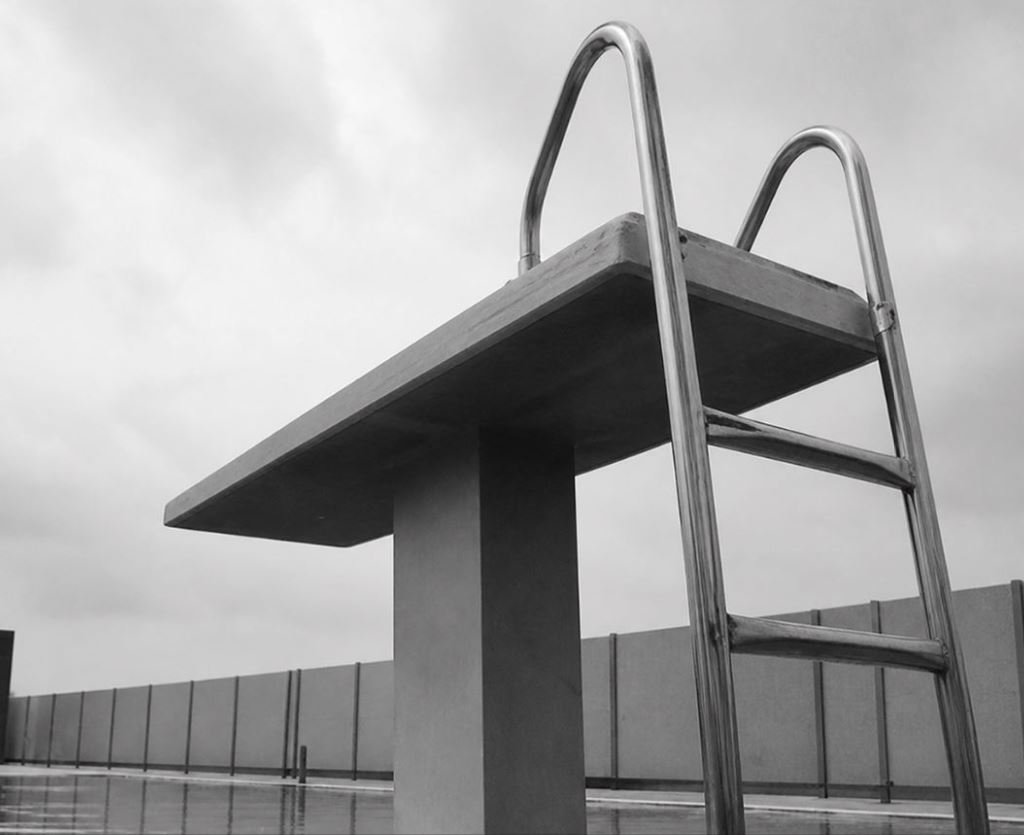
Drownings in our area of New York happen most often at private residential pools, public swimming facilities, Long Island Sound beaches, the Hudson River shoreline, and inland lakes and reservoirs. Each setting carries its own risk profile and its own legal framework.
Private residential pools. Backyard in-ground and above-ground pools at homes throughout Westchester are the leading site of pediatric drowning, typically tied to missing isolation fencing, propped-open gates, or absent adult supervision during a pool gathering.
Public municipal pools. Pools operated by towns, villages, and the county, including Tibbetts Brook Park in Yonkers, Saxon Woods Pool in White Plains, and Sprain Ridge Pool, where lifeguard staffing levels, water clarity, and emergency response time often determine liability.
Long Island Sound beaches. Playland Beach in Rye, Glen Island Beach in New Rochelle, and Hudson Park Beach, where rip currents, unmarked drop-offs, and distracted lifeguards produce a steady volume of rescue and recovery cases.
Hudson River shoreline. The Hudson from Yonkers north through Hastings-on-Hudson, Tarrytown, Sleepy Hollow, Ossining, Croton-on-Hudson, and Verplanck, where swift currents, cold-water shock, and unfenced piers turn small mistakes into fatal events.
Inland lakes and reservoirs. Lake Mohansic at FDR State Park, the Croton Reservoir system, and other lakes across northern Westchester and Putnam Counties, where shoreline drop-offs and submerged hazards are inadequately marked.
Hotel and resort pools. Pools at chain properties in White Plains, Tarrytown, and Rye Brook, where management has reduced or eliminated lifeguard positions in favor of “swim at your own risk” signage.
Country club pools. Private club pools throughout Scarsdale, Larchmont, Mamaroneck, Rye, and Bedford, which often contract aquatic supervision to third-party staffing companies with inconsistent training standards.
Apartment, condo, and HOA pools. Multifamily property pools in Yonkers, White Plains, New Rochelle, and Mount Vernon, where barrier maintenance and supervision policies frequently fall below code.
Summer camp swim areas. Day and overnight camps in northern Westchester and Putnam Counties whose lifeguard ratios and water-skill testing must comply with 10 NYCRR Subpart 7-2 governing children’s camps.
In-home daycares and preschools. Wading pools, bathtubs, and small spas at licensed and unlicensed childcare operations, where infant and toddler submersion can occur in just a few inches of water.
Hot tubs and spas. Heated tubs at hotels, gyms, and private homes, where suction entrapment, hyperthermia, and intoxication are the dominant injury mechanisms.
Marinas, docks, and boating areas. Marinas along the Hudson and Long Island Sound where missing life jackets, alcohol service, and unfenced access to deep water create foreseeable risk to swimmers and boaters alike.
What does a drowning accident attorney actually do for your family?
A drowning accident attorney investigates the submersion event, identifies every party whose negligence contributed to it, preserves rapidly perishable evidence, and pursues full compensation through settlement or trial. Ideally our work begins within hours, not weeks.
We secure pool maintenance logs, lifeguard certification records, surveillance footage, 911 dispatch recordings, and incident reports before they are altered or destroyed. We retain aquatic safety experts, forensic pathologists, pediatric neurologists, and certified life-care planners who can reconstruct what went wrong and quantify lifelong consequences.
We then negotiate directly with insurers and corporate defendants, file suit in Westchester County Supreme Court when necessary, and try the case to a jury when defendants refuse to pay full value.
Why is evidence preservation so urgent in drowning cases?
Pool chemical logs, surveillance footage, and lifeguard scheduling records are routinely overwritten or discarded within days. A spoliation letter sent immediately after the incident locks down this evidence before a property owner or municipality can claim it was lost in the ordinary course of business.
What should you do in the first 48 hours after a near-drowning?
Get the victim a full medical evaluation even if they appear recovered, because secondary drowning and delayed cerebral edema can develop hours after the event. Then call an attorney before speaking with the property owner’s insurance carrier or signing any incident report.
Who should investigate the scene of a drowning?
A qualified aquatic safety expert should document barrier compliance, drain cover condition, water clarity, signage, and lifeguard staffing within the first week. Once the property is cleaned, a fence is repaired, or a drain cover is replaced, the physical evidence is gone for good.
Why do you need an attorney instead of dealing with the insurance company directly?
You need an attorney because pool owners, municipalities, country clubs, and hotels carry liability policies handled by adjusters whose job is to limit your recovery. They will offer a quick settlement that does not begin to account for the lifetime cost of an anoxic brain injury or the full value of a wrongful death claim.
In drowning cases the defendant is rarely a single homeowner. It may be the homeowner plus their pool service company plus the manufacturer of a defective drain cover plus a country club that served alcohol to the supervising parent. Sorting out who is liable, and in what proportion, requires experience that an adjuster will never volunteer.
While you focus on grief and recovery, we handle the carriers, defense firms, and corporate defendants who are already preparing their case against you.
How much does it cost to hire a drowning accident attorney?
Nothing upfront. We work on a pure contingency fee, which means you owe us no fee unless we recover compensation for you. We also advance the costs of expert witnesses, accident reconstruction, and medical record retrieval.
Can you recover compensation if your loved one was partly at fault?
Yes. New York follows pure comparative negligence under CPLR § 1411, which means a victim’s share of fault reduces but does not bar recovery. Even if a court finds a swimmer 50 percent responsible, the family still recovers half of the total damages.
What if the negligent party is a city or town?
You have only 90 days from the date of the incident to file a Notice of Claim under General Municipal Law § 50-e. Missing this deadline can permanently bar a claim against a municipal pool, beach, or park. This is one of the most common ways families lose viable cases.
Who is legally responsible when someone drowns or nearly drowns?
Legal responsibility for a drowning attaches to whoever owed a duty of care over the body of water and breached that duty in a way that caused the submersion. Negligence has four elements, duty, breach, causation, and damages, and each must be proven against every defendant.
Pool owners owe a heightened duty to children under the attractive nuisance doctrine, which holds that an unfenced or improperly secured pool is reasonably foreseeable to draw young children regardless of trespass. Hotels, country clubs, and apartment complexes owe a duty to guests, members, and tenants to maintain their aquatic facilities in compliance with 10 NYCRR Subpart 6-1, the New York State Sanitary Code provisions governing swimming pools and bathing beaches.
Municipalities operating public facilities like Tibbetts Brook Park in Yonkers, Saxon Woods Pool in White Plains, Sprain Ridge Pool, and Glen Island Park in New Rochelle owe a duty to provide adequate lifeguard staffing, water clarity, and barrier maintenance.
Can multiple parties be sued for a single drowning?
Yes, and in most catastrophic cases multiple parties should be sued. A single incident may give rise to claims against the property owner, the pool maintenance company, the lifeguard service contractor, the manufacturer of a defective drain cover under the federal Virginia Graeme Baker Pool and Spa Safety Act, and any party who served alcohol to a supervising adult.
What about a babysitter, daycare, or summer camp?
Childcare providers owe a non-delegable duty of supervision. When a toddler drowns at an in-home daycare or a child slips under during a camp swim period, both the individual caregiver and the operating entity are typically named as defendants.
How is fault apportioned among multiple defendants?
Under CPLR Article 16, defendants in personal injury cases are jointly and severally liable for economic damages, but liability for non-economic damages is limited to each defendant’s percentage of fault when that share falls below 50 percent. Identifying every responsible party early is critical to maximizing recovery.
How does our firm specifically help drowning victims in Westchester County?
We bring catastrophic-injury trial experience to a tort that demands forensic precision. Our team has handled traumatic brain injury, wrongful death, and product liability cases of similar complexity, and we apply the same trial-ready posture to every drowning matter regardless of whether it ultimately settles.
We litigate in Westchester County Supreme Court in White Plains, Putnam County Supreme Court in Carmel, and the federal Southern District of New York when corporate defendants and out-of-state pool manufacturers are involved. We know the local judges, defense firms, and insurance carriers who handle aquatic claims in this region.
Jeffrey personally meets with every client. From your first phone call through the final settlement check, you work directly with the attorney whose name is on the door, not a case manager or junior associate.
To speak with us about a drowning or near-drowning incident, call 914-315-0111 or contact us through our secure form.
Where do we represent drowning accident victims in Westchester County?
We represent families and victims throughout Westchester County and the surrounding region, including Ossining, Yonkers, White Plains, New Rochelle, Mount Vernon, Mamaroneck, Larchmont, Rye, Harrison, Scarsdale, Tarrytown, Sleepy Hollow, Peekskill, Cortlandt, Mount Kisco, Bedford, Pleasantville, Chappaqua, Hastings-on-Hudson, Dobbs Ferry, and Irvington.
We also accept cases originating at public pools, beaches, and waterfronts throughout the region, including Tibbetts Brook Park, Saxon Woods Pool, Sprain Ridge Pool, Playland Beach in Rye, Glen Island Beach, Croton Point Park, Lake Mohansic, the Croton Reservoir system, and Hudson River waterfront from Yonkers north to Verplanck.
What damages can be recovered in a drowning case?
- Past and future medical expenses, including ICU care, neurorehabilitation, and ventilator support
- Lifetime attendant care, home modifications, and durable medical equipment for survivors with permanent disability
- Lost wages and diminished earning capacity, including projected lifetime earnings of a deceased child or adult
- Conscious pain and suffering of the victim during the period between submersion and death or stabilization, recoverable in survival actions under EPTL § 11-3.2
- Loss of consortium for spouses and loss of parental guidance for children
- Pecuniary loss to next of kin under EPTL § 5-4.1, the New York wrongful death statute
- Funeral and burial expenses
- Punitive damages where the defendant’s conduct was reckless or grossly negligent
How does comparative fault affect a drowning settlement?
A swimmer’s percentage of fault directly reduces recovery. If a jury finds the victim 30 percent at fault for ignoring a posted warning, the family recovers 70 percent of the total damages. We work to minimize attributed fault by reframing the conduct of supervisors, lifeguards, and property owners as the proximate cause of the incident.
How long does a drowning case take to resolve?
Most drowning cases resolve within 18 to 36 months from filing. Catastrophic and wrongful death cases involving multiple defendants and complex life-care planning may take longer, but settlement leverage almost always increases as the case approaches trial.
How are future medical and care costs calculated?
We retain certified life-care planners and forensic economists who project the cost of every future surgery, therapy session, medication, and aide hour over the victim’s projected lifespan, then reduce those figures to present value using actuarial tables.
What are the most common causes of drowning and near-drowning accidents?
The leading mechanism in residential pool drowning incidents is the absence of a compliant four-sided isolation fence with self-closing, self-latching gates. The U.S. Consumer Product Safety Commission consistently identifies barrier failure as the single most common factor in pediatric pool deaths.
Other recurring causes include:
- Inadequate or absent lifeguard staffing at public pools, hotels, country clubs, and summer camps
- Defective or missing drain covers causing suction entrapment
- Lack of supervision at in-home daycares, after-school programs, and camps
- Alcohol consumption combined with pool, dock, or boat use
- Failure to post warning signs about water depth, currents, or no-swimming zones
- Slippery pool decks causing falls into the water
- Cloudy or improperly chlorinated water that conceals a submerged victim
- Poorly maintained docks, ladders, and seawalls along Hudson River and Long Island Sound waterfront
- Missing rescue equipment such as ring buoys, reaching poles, and shepherd’s crooks
- Failure to immediately call 911 or initiate CPR
Who is liable for a drowning at a hotel or country club?
The property owner and the entity operating the pool are both liable when their lifeguards are inadequately trained, absent, or distracted. Hotel chains and country clubs frequently outsource lifeguard staffing to third-party contractors, all of whom can be named as defendants in the same lawsuit.
Are pool drain entrapment cases governed by federal law?
Yes. The Virginia Graeme Baker Pool and Spa Safety Act of 2007 requires anti-entrapment drain covers on every public pool and spa. A pool that is not in compliance creates a strong product liability and premises liability claim when entrapment occurs.
Other injuries we work with in near-drowning cases
Near-drowning produces a distinctive injury profile driven by oxygen deprivation. The most common and most serious injury is hypoxic-ischemic brain injury, where the brain is deprived of oxygen long enough to cause permanent neurological damage.
Other injuries we see and litigate include:
- Anoxic brain injury and persistent vegetative state
- Cerebral palsy in pediatric near-drowning survivors
- Cognitive deficits, memory loss, and developmental regression
- Aspiration pneumonia from inhaled water and gastric contents
- Acute respiratory distress syndrome (ARDS) requiring prolonged ventilation
- Cardiac arrhythmia and ischemic cardiac injury
- Spinal cord injury from diving incidents that preceded the submersion
- Hypothermia complications in cold-water drownings in Long Island Sound and the Hudson River
- Post-traumatic stress disorder in surviving victims and witnessing family members
Does New York’s serious injury threshold apply to drowning cases?
Insurance Law § 5102(d), the no-fault serious injury threshold, applies only to motor vehicle cases and does not apply to drowning claims. Drowning injuries are litigated under standard premises liability, products liability, or negligent supervision theories, which means recoverable damages are not limited by the no-fault threshold.
What is delayed or secondary drowning?
Secondary drowning describes a process where water inhaled during a near-drowning event causes pulmonary edema hours after the incident appears resolved. Children who seem fine after a pool rescue can deteriorate suddenly, which is why immediate medical evaluation is essential after every submersion event.
Can family members recover for emotional trauma?
Yes, in defined circumstances. New York permits bystander recovery when an immediate family member witnessed the death or serious injury of a loved one and was within the zone of danger, a doctrine that frequently applies to drowning cases where a parent watched the incident unfold.
Are summer camp drowning cases handled differently?
Yes. Children’s camps operating in New York must comply with 10 NYCRR Subpart 7-2, the children’s camp regulations, which set lifeguard ratios, supervision requirements, and water-skill testing protocols. A regulatory violation creates a strong negligence per se argument against the camp operator.
Do you handle drowning cases at private homes?
Yes. Homeowner liability cases are some of the most fact-intensive drowning matters because they typically involve a homeowner’s policy, the pool service company, the fence installer, and sometimes a pool product manufacturer all in the same case.
What about Hudson River and open-water drownings?
These cases turn on whether anyone owed a duty to warn or supervise. Riparian property owners, marina operators, event organizers, and waterfront restaurants can all be liable when they create or fail to warn of a foreseeable hazard.
What is the statute of limitations for a drowning case in New York?
The statute of limitations for personal injury from a drowning is three years from the date of the incident under CPLR § 214. The statute of limitations for a wrongful death claim is two years from the date of death under EPTL § 5-4.1, regardless of when the underlying injury occurred.
Claims against municipalities, school districts, and other public entities require a Notice of Claim within 90 days of the incident under General Municipal Law § 50-e, with the lawsuit itself filed within one year and 90 days. These deadlines are strict and are rarely extended.
Why hire Jeffrey Weiskopf, P.C. for your drowning case?
We combine catastrophic-injury trial experience with the personal attention you cannot get at a high-volume firm. Jeffrey personally handles every case from intake through resolution, and the firm’s $20 million in client recoveries reflects a willingness to take cases to verdict when defendants refuse to pay full value.
Do you take drowning cases on contingency?
Yes. You pay $0 unless we recover compensation for you. Consultations are always free, and we advance every cost of investigation, expert retention, and litigation.
Will Jeffrey personally handle my case?
Yes. From the first call through the final resolution, Jeffrey is the attorney managing your matter. You will not be passed off to a paralegal or junior associate.
What if the drowning happened outside Westchester County?
We handle catastrophic injury cases throughout New York State and have appeared in federal courts including the Southern, Eastern, and Northern Districts of New York. We have also been admitted pro hac vice in Florida federal courts when our clients’ cases required it.
Speak with a Westchester County drowning accident attorney today.
If you lost a loved one or someone you love suffered an anoxic brain injury after a near-drowning, time is working against you. Evidence disappears, witnesses move, and Notice of Claim deadlines run quickly when a municipality is involved.
The Law Office of Jeffrey Weiskopf, P.C. offers free, confidential consultations to anyone considering legal action. Call 914-315-0111 or contact us through our secure online form to begin. Our phone is answered 24 hours a day.

Call us today or submit a contact inquiry below.